WHO SHOT SCOTT: the Alter Ego and the Man Behind It

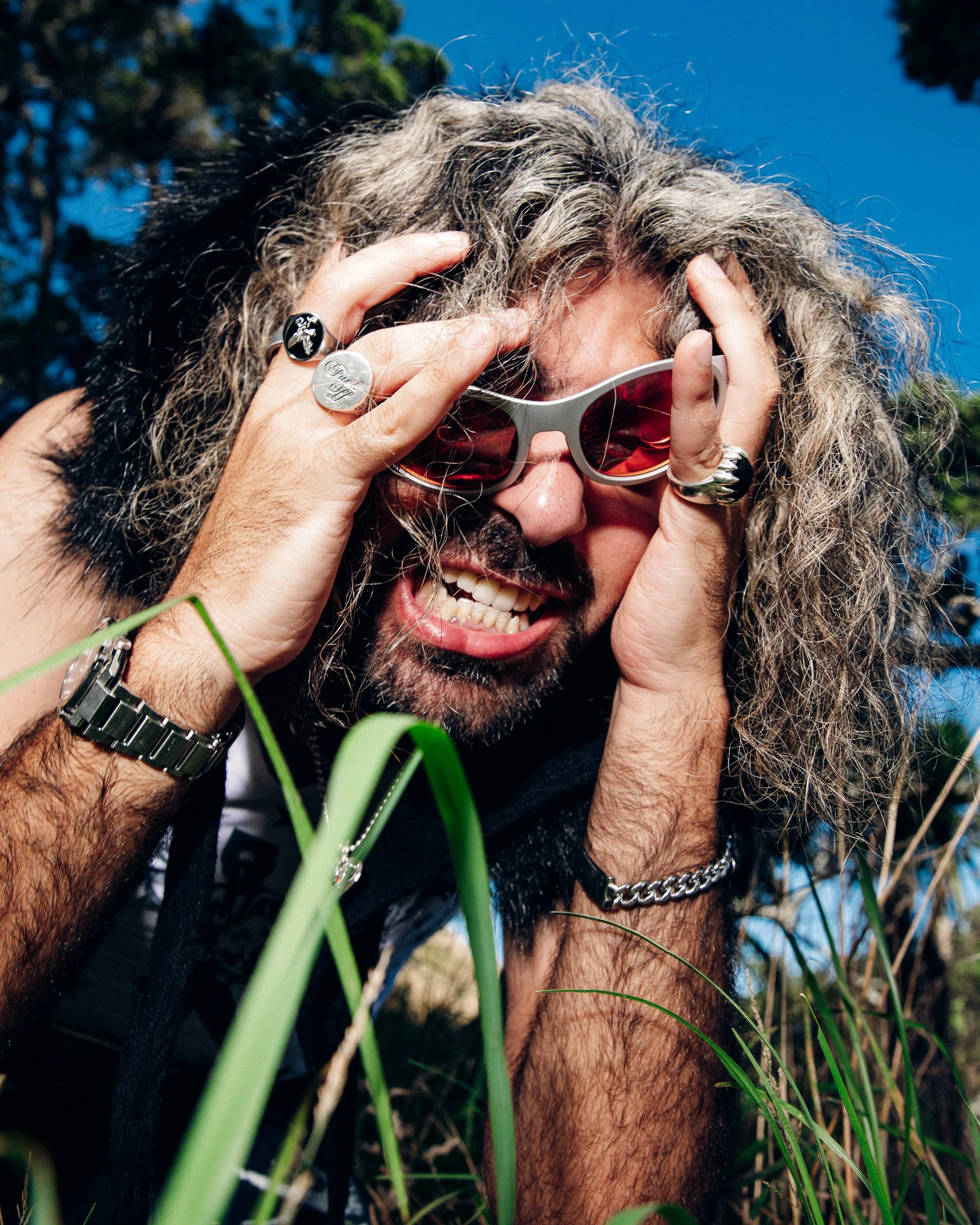
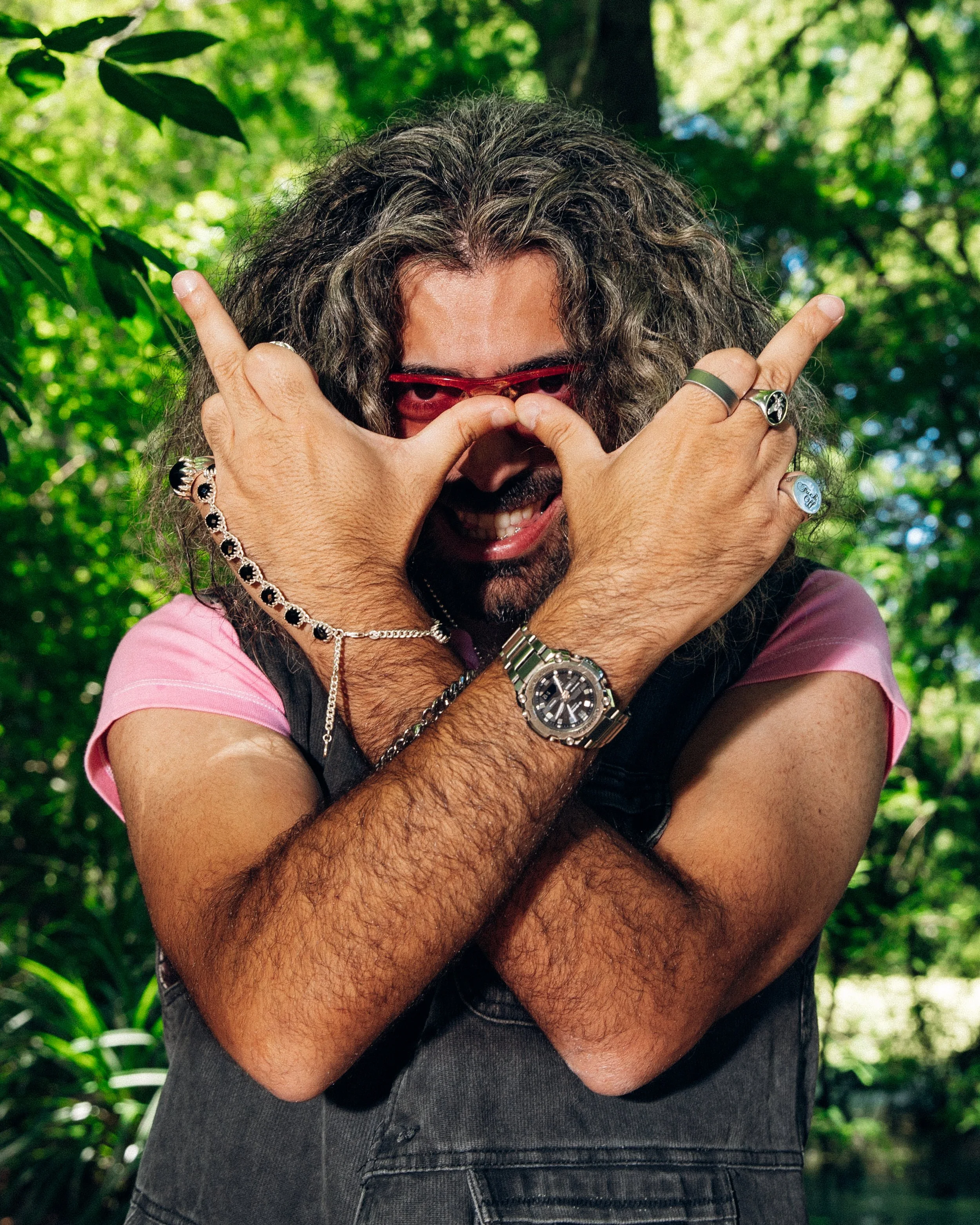
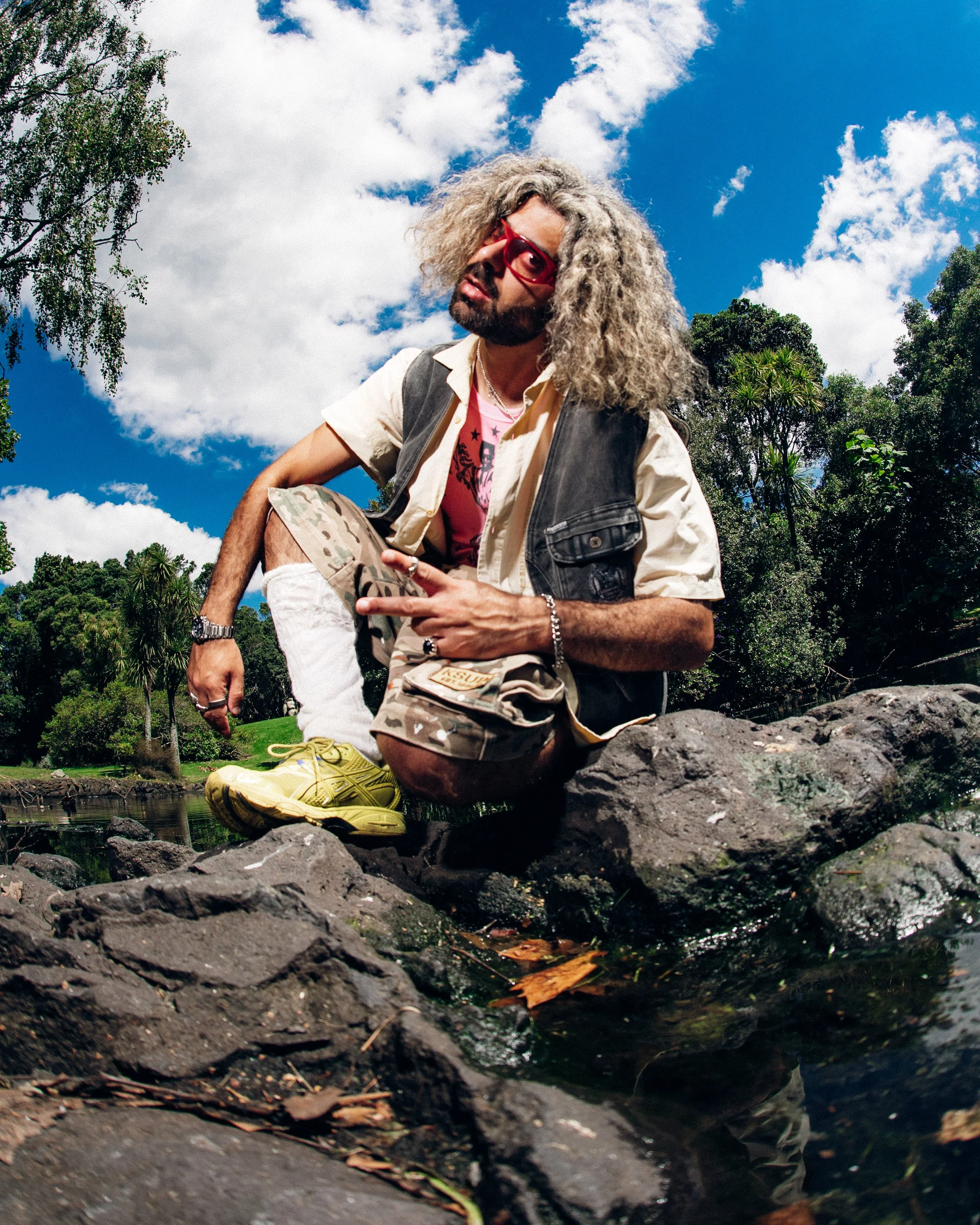
Hood: Jing He, Glasses: Alba Optics
For this issue of Cake The Mag, we are thrilled to sit down with WHO SHOT SCOTT, a boundary-defying artist whose music traverses vulnerability, self-reflection, and sonic innovation. From his candid lyricism to his genre-defying soundscapes, WHO SHOT SCOTT has established himself as a voice that speaks to the complexities of the human experience while pushing the limits of contemporary music. With a blend of raw storytelling and intricate production, his artistry captures moments of pain, growth, and catharsis in a way that resonates deeply with listeners around the world.
Behind the music is Zaidoon Nasir, the man who prefers to be called Zee, whose introspection and creative vision have shaped WHO SHOT SCOTT into a platform not just for entertainment, but for genuine expression. Zaidoon fled Iraq with his mother at the age of two before settling in New Zealand, where growing up between cultures shaped both his sense of identity and his creative voice. WHO SHOT SCOTT is known for fusing raw vulnerability with explosive, genre-blurring soundscapes that draw from alternative hip-hop, punk energy, and electronic experimentation. Across five EPs, his music has earned international recognition, with “LONERS ANTHEM” topping the NZ College Radio Network charts and later being named the most beloved track of 2022, while projects like MERCY III and BRAIN (SIDE A) broke into North American College Radio charts. With major festival appearances, support slots for Snoop Dogg and Yung Gravy, global radio and playlist support, two APRA Silver Scroll nominations, and an international Borderlands 4 sync, WHO SHOT SCOTT has built a devoted global following, transforming themes of alienation, pain, and displacement into connection, pride, and power through his music.
In this exclusive interview, we explore the origins of his sound, the philosophy behind his name, and the personal evolution that continues to define his journey.
Cake The Mag: Obviously, you’ve talked about vulnerability before, and now with “Problems in My Head” and “Loners Anthem”, you’re quite an open book, even with “French Fever”. I wanted to know: when was the moment you realised that music is the way you want to express pain and stories?
WHO SHOT SCOTT: It’s a funny answer, in a way, because traditionally, songwriting… I don’t know. I feel like, when I first got into the music industry, I was hanging around in songwriting sessions with a lot of “songwriters,” and everyone had a very poetic way about them, a way of writing that feels very “songy”. I don’t know how to explain that; it might be a bit abstract. But I remember feeling like I was never really great at being poetic, or being “that” kind of songwriter in a lot of senses.
But I always felt like I had production ideas. I always felt like I had melody ideas because that came naturally to me, along with the production. I started doing this in lockdown: I began writing, and I had all these beat ideas, melody ideas, song ideas. I had everything except the lyrics. I thought, “You know what? Screw it.” I decided I was just going to tell exact stories from my life, exactly how they happened. Not go too poetic, not overcomplicate it. I will just tell the story as if I’m talking to a friend or talking to you right now.
I accidentally stumbled into this style of songwriting where the more vulnerable and candid it is, the more it feels like honest expression. Sometimes I even worry, “Is that too on the nose?” But then I think, if I was telling a friend what happened, this is exactly how I would say it. That’s how it started. It was liberating because once I realised the songs were sounding the way I wanted, I thought, “Wow, I can just tell my story without worrying too much about what it is.”
Over the years, making my music has been cathartic. There’s something profoundly beautiful about taking all this pain (my story has highs and lows) and turning it into something positive. I consider myself generally a happy person, but there’s trauma in my past, generational trauma passed down to me, as with many people. In the process, I’ve found peace, understanding, and maybe purpose. I’ve found ways to repurpose my experiences into something I consider, at least, a positive and beautiful outlet.

Cake The Mag: Do you feel like it changes your perspective on the topics you write about?
WHO SHOT SCOTT: Yeah, totally. Especially if I’m writing about problems that happened to me (no pun intended) I might be writing them at different stages. It could be something I’m actively going through, or something I dealt with a year ago, or even ten years ago. That context matters a lot in how I relate to it.
A lot of the reflective songs, the ones about distant past experiences, are the most interesting. They have the most profound effect. Like “French Fever”: I wrote about something from when I was a teenager, and I thought, “Whoa, I haven’t thought about this in so long.” But really, that situation affected me. It breathes new life into the memory, and also makes me question it. I wrote that song as my 15-year-old self, but now, as a grown-up, I think, “What was she going through that she felt the need to do that?”
I could even rewrite the song now as the version of me that exists today, feeling sorry for that French teacher. It’s interesting. I don’t know that I have a full answer, but the passage of time plays such a role in the catharsis.
Cake The Mag: From an outsider’s perspective, I feel like maybe you’re a lot kinder than the French teacher, which is why you can empathise. Not everyone can. And when you said, “I’m not Sadam, I’m not Haram,” it made me laugh so much because coming from the Middle East, it’s so comedic, but to other people, it’s probably wild.
WHO SHOT SCOTT: Everyone says *French Fever* is funny. It’s tongue-in-cheek.
A lot of people message me, “I’m so sorry you went through that,” but to me it’s funny. I wasn’t Saddam, but I was treated like Saddam Hussein. It’s a nuanced thing you wouldn’t understand unless you grew up like that.
Cake The Mag: It’s just because of where we’re from—we can take it with a grain of salt because we know the reality.
Is there anything from your past projects that you look at differently now? Something you didn’t appreciate back then but do now?
WHO SHOT SCOTT: We’re constantly growing. Today, I was thinking of my first EP which I put out in 2021. There’s a lot of anger in it. I was going through a lot. Ego was coming in as a defense mechanism. I’m proud of the EP; it accurately depicts where I was at the time, which is why I still like it. But the tone of some of the writing came from an insecure place. Ego always comes from insecurity, not confidence.
When I listen back and hear braggadocious lines, I cringe a bit because that’s not where I’m at now. But I appreciate that it’s accurate to who I was, and hip-hop naturally has that energy. Now, when I perform those songs live, I sometimes change the lyrics to reflect who I am now.
All of that music is real and part of my story. Since I started WHO SHOT SCOTT, I’ve been at peace with viewing past music as chapters of my story and accepting them for what they are. They’re not my whole story, just where I was at that time.

Cake The Mag: I didn’t ask last time: why “WHO SHOT SCOTT”? Where did it come from?
WHO SHOT SCOTT: Everyone calls me Scott, and I’m like, no, it’s Zee or Zaidoon! I’m adamant about that. I know someone’s a “real fan” when they call me Zee, not Scott.
This is probably the most I’ll say about it. The name reflects the journey before I started the project. There was a lot of anger, 2019 was difficult. I parted ways with a close friend I made music with, not healthily. I dealt with painful relationships and family issues. I had to confront myself, take accountability for pain I caused myself and others, and essentially be “reborn.”
The name reflects that switchover, the catharsis, and the rebirth.
Cake The Mag: I didn’t know your name was Zaidoon until my first email with your manager. That’s when I thought, “Oh, he’s Arab. Iraqi!” “WHO SHOT SCOTT” is genre-ambiguous, which allows space for diverse creativity.
WHO SHOT SCOTT: Exactly. I like the ambiguity. And I want people to know I’m Zee. It’s about moving from that to this, the optimism in the future. Even though the songs are dark, I’m a very happy person.
Cake The Mag: When I find an artist I like, I listen to their music before looking into their personal life. I want to see them through the lens they create. Are there misconceptions people have about you based on your music?
WHO SHOT SCOTT: I don’t want to demystify things. I like people having their own relationship with the music. Last year in Japan, a guy invited me to a party with drinks and drugs. I don’t do any of that, and he was surprised. People often think WHO SHOT SCOTT is my real self, but it’s my alter ego. I’m reserved. “Loners Anthem” reflects that. I have a small circle of close friends, love producing music, and live quietly. My art is pure expression for me. Some people may expect something else based on the music, but my life is separate from it.


Cake The Mag: Can we talk about you as a producer?
WHO SHOT SCOTT: I recently produced a song for JessB, “Power,” featuring Sister Nancy and Sampa The Great. I produced the entire EP for Jujulipps. WHO SHOT SCOTT is at the forefront, but I love producing. I feel like a producer first and foremost. WHO SHOT SCOTT is my heart, but my passion is production, collaboration, and writing music with others.
Cake The Mag: Which came first professionally?
WHO SHOT SCOTT: Producing came first technically. I’ve been producing longer, but WHO SHOT SCOTT is the leading charge.
Cake The Mag: Any dream collaborations?
WHO SHOT SCOTT: I really like Pharrell.
The philosophies of Rick Rubin as a creative definitely resonate with me – patience and a meditative approach to life and music. I would love to work with somebody like him if not him.
I also want to produce for experimental, off-center artists. That’s the direction I’m building toward.
Cake The Mag: You know who needs your music? FIFA.
WHO SHOT SCOTT: Yes! I would love that. I see FIFA, GTA6, or other games in my comment sections all the time.
Cake The Mag: You’ve dropped multiple EPs and often release singles. How do you know when you have a tracklist ready as one body of work?
WHO SHOT SCOTT: Every single I release is part of a bigger project. I’ve never released a song that isn’t part of a larger expression. I’ve finished all the music for the next year already. Releasing singles lets the songs have the moment they deserve. Albums are cool, but I’m still building trust with listeners. Everything is part of a bigger project.
Cake The Mag: I can’t wait. You talk about transformation. Outside of music, what version of yourself are you still growing into?
WHO SHOT SCOTT: That’s the dopest question because that’s what I’m all about. I’m very private. I want a zen, peaceful life. I’ve been meditating for two years, trusting my intuition. I believe in nurturing the pure inner child with love, connection, and kindness. Every year, I wish to be kinder and more patient with myself and others. The world is hard right now, and I want to be the change I wish to see. Music helps, but my personal growth does too. I’m moving forward aligned with positivity.
Cake The Mag: Is that why you’re not very active on social media? To protect your peace?
WHO SHOT SCOTT: Yes. I don’t like oversharing. I love conversations and real connections. I’m private, but I want to connect with my community. I respond to everyone, even if I’m not posting stories daily. That’s my way of keeping the connection alive.